« June 2006 | Main | August 2006 »

July 30, 2006

Various Artists 'PDX Pop Now! 2006'

pdxpop2.jpg

PDX POP Now! is a labor of love, bringing together local volunteers to put on a free, nonprofit, all ages, KICK ASS music festival in the heart of Southeast Portland, Oregon. Mixing the biggest and smallest acts, the softest, quietest and the brashest, loudest, PDX POP Now! goes well beyond the bounds of pop music, incorporating folk, experimental, instrumental, hip hop, electronics, and more. The PDX POP Now! 2006 Compilation is (not surprisingly) similarly diverse. Exclusive tracks from Stephen Malkmus, The Thermals, Menomena, Viva Voce, Vursatyl (of Lifesavas), Talkdemonic, Tara Jane O’Neil, and more highlight PDX Pop Now! 2006. It’s worth noting, too, that this compilation was assembled completely blind. None of the organizers knew who they were listening to when they heard the tracks. Yes, artists like Colin Meloy, March Fourth, and Jackie O Motherfucker are pretty easy to pick out, but the bands on this comp are on here because they represent the pure sonic best of Portland and nothing else. As a collection, PDX POP Now! 2006 aim at celebrating and promoting Portland’s vital music community -- the 40-song collection also features musical gems contributed by PDX favorites Mirah, The Joggers, The Blow, and The Planet The. PDX Pop Now! extended an open invitation to its city’s musicians to submit music for consideration for the album as well, and selections culled from the work submitted by more than 350 artists round out the comp. Displaying Portland’s tremendous musical diversity, rock, pop, punk, hip hop, folk, electronic and experimental music, and even an original marching band arrangement are represented on the discs.

July 25, 2006

Various Artists 'Monsieur Gainsbourg Revisited'

serge.jpg

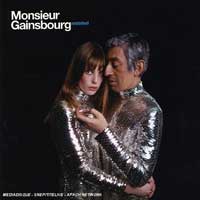
Serge Gainsbourg, the singer-songwriter-Pygmalion-actor-filmmaker-author-entertainer-agitator-gambler-lady’s man, a man whose many facets reflect in each other to form one of the most dazzling prisms in twentieth-century French culture, and whose sparkle now spreads well beyond both France and the century. A few years ago both the superstar Madonna and the underground prophet John Zorn declared their admiration for Gainsbourg – separately, but with the same zeal. The English group Portishead lifted the heady atmosphere of Cargo culte from the Melody Nelson album for their stunning remix of Massive Attack’s Karmacoma. De La Soul sampled Gainsbourg, Beck borrowed wholesale (Paper tiger), and countless artists cover his songs. In France and worldwide (from Air to Sonic Youth) artists by the dozens claim him as an influence. Most are flabbergasted when they realise that at the beginning, he was the heir and soon-to-be conspirator of the Left Bank cabarets and the cellars of Saint-Germain, mixing Baudelairean poetry and oblique jazz under the influence of Boris Vian, coloured with exotic essences from lounge music. Again, when they discover he became the transformer of the pop movement, turning young Londoners’ heads, handing out songs to girls like sugar-and-spice pills. Or once more, when they come across the film soundtracks, mirroring some of his intensely cinematographic albums, such as Initials BB or Melody, not to mention when he parachuted into Jamaica at the time of the reggae version of La Marseillaise, or into New York USA under the blows of digital funk. For Gainsbourg is the classical and the modern combined in one man – ultra-classical and ultra-modern, able to absorb, Bowie-like, all that is avant-garde and bring it into the light, or to wrap up slang in the words of the great French orator, Bossuet.

When a cover album was planned by Jean-Daniel Beauvallet, Christian Fevret and Timothée Verrecchia for the fifteenth anniversary of his last lungful of Gitane smoke, it quickly became obvious that only foreign groups and artists could give new life to a repertoire so ingrained in French culture. Invitations were sent out and the overwhelmingly positive responses returned like boomerangs. Everyone rushes for Gainsbourg, and the cast list speaks for itself – from Tricky to Franz Ferdinand, from Cat Power to The Rakes, from Placebo to Michael Stipe (REM), from Portishead to Marianne Faithfull, from Jarvis Cocker to The Kills... “Pas dégueu !” (not too rotten), as Gainsbourg would have said. Maintaining the links with the past, some of the best known original singers also agreed to appear: Françoise Hardy, Dani, and above all Jane Birkin! One last hurdle remained – the language barrier, a risky business with Gainsbourg. An exercise in high precision, poetically and semantically, entrusted to two word-jugglers with a worldwide reputation, Boris Bergman and Paul Ives. Despite the prestige of the cast and the difficulty of carrying it out, Monsieur Gainsbourg Revisited was above all a project undertaken with humility, lightness and a certain degree of impertinence. This would, no doubt, have pleased the man who, over the thirty glorious years of his career, inspired this very cocktail more than anyone else.

July 24, 2006

Azam Ali 'Elysium for the Brave'

azamali.jpg

In a career which spans over a decade and includes eight collaborative albums and solo albums, Azam Ali has confirmed her place as one of the most prolific, versatile, and gifted singers on the world music stage today. Her dedication to defying cultural specificity in music, and her unwillingness to settle into one form of musical expression have earned her the respect of both her peers and critics worldwide. When one looks at her entire body of work, it is hard to deny Azam her rightful place among the best singers and composers in music today.

Elysium for the Brave, Azam’s second solo album, signals a new turn in her musical evolution. The album, her most ambitious work to date, brings together musicians from varied musical backgrounds performing in diverse permutations. Singing predominantly in English for the first time, the songs are based on lyrics written by Azam herself and reveal a poetic lyricism heard only in glimpses of her previous works. From the new CD’s opening track, “Endless Reverie,” it becomes immediately apparent that Ali has moved into new and exciting sonic territory. The frame drum pulse is familiar but the percolating synthesizer textures and haunting vocals sung in English take the song into a darkly beautiful place that exists between the worlds of electronic rock and global fusion. This fascinating terrain is also occupied by the tracks, “In Other Worlds,” “In this Divide” and “Forty One Ways.” While impeccable electronics and programming abound on Elysium for the Brave, they are balanced throughout the CD with traditional instrumentation. The gorgeous lafta and hand drums which propel “Spring Arrives” and the insistent ney flute which lends a haunting quality to “I Am a Stranger in this World” are brilliant examples of how organic and electronic instrumentation can beautifully co-exist. In fact, despite the mix of ancient and modern instrumentation, Elysium for the Brave is a highly coherent body of work that weaves together all of Azam’s cultural and musical influences into a tapestry of atmospheric rock, electronic, and global sounds. Azam’s distinctive voice can also be heard on myriad film and television scores among which include “Matrix Revolutions,” “Godsend,” “Papparazi,” the upcoming major motion picture 300, Children of Dune, Earthsea, Dawn of the Dead, Alias, and The Agency.

July 19, 2006

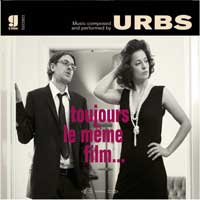
Urbs 'toujours le meme film..'

urbs.jpg

Urbs, aka Paul Nawrata has been dj-ing for 15 years in Austria usually playing hip-hop but also breakz. After years of dj-ing he has now produced his first album 'toujours le meme film..'

Starting in 1997, Urbs' first production 'Closer to God' made it on several compilations. Both the original version and the remix by Thievery Corporation. From 2000 to 2003 Urbs worked together with DJ Cutex and the track 'Break of Dawn' became his international breakthrough.

For the last two years Urbs has been working on his first solo Album; Toujours le même film changing his style from hip-hop to soundtrack but never really losing his hip-hop roots. Urbs’ influences started off in his youth listening to classic tunes and New Wave, metal, and of course hip-hop. Looking for special sounds, Urbs started collecting soundtracks, chansons and Jazz of the 60s. Today, Urbs’ biggest influences for his album Toujours le même film are Ennio Morricone, Serge Gainsbourg, Francis Lai, Francois de Roubaix, Alain Goraguer, and original scores in general.

July 14, 2006

Birdy Nam Nam 'Uncivilized World'

birdynn.jpg

Birdy Nam Nam (the name's an obscure reference from a Peter Sellers film) is a DMC World Championship scratch team... from France. And while they obviously have the chops to be able to attain that level of turntablist success, they're more about making "songs" and "music" as opposed to cutting together repetitive loops and gimmicky licks. They've clearly got a good sense of humor to match their deep musical knowledge, genre dexterity and assumedly vast record collection! Much in a similar style to Kid Koala, they piece together a patchwork of source material that runs from jazz to soul to any-and-everything. Through expert vinyl manipulation they forge seamless creations with a sophistication on par with kindred spirits DJ Shadow, DJ Food and the likes.

July 12, 2006

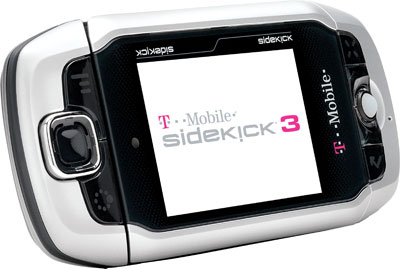
Sidekick 3

Sidekick3qs.jpg

Cell phones often inspire devotion, but few have a following like T-Mobile's Sidekick. The device has long been the instant messaging and e-mailing device of choice among hipsters because of its nifty flip screen and comfortable rapid-fire keyboard. But users have griped about the poor camera, crippled Web browser, and lack of expandability. The Sidekick 3 improves those areas to varying degrees and delivers Bluetooth and a smaller design. The Sidekick 3 is 20 percent smaller than its predecessor but weighs a bit more (6.7 ounces versus 6.5 ounces). The keyboard's old membrane keys have been replaced with hard plastic keys that are faster to use and more responsive.

The long rubber bumpers of the Sidekick II are gone, and the buttons within them were replaced with smaller plastic buttons. Most noticeable is the trackball, which replaces the old scroll wheel. The ball has a much looser feel but turns out to be a good navigation option. More of the device's menus can now be explored with the trackball alone, which has a 360-degree movement range and can be pressed to select items. A few tweaks improve the Danger OS: Similar applications (IM clients and organizational apps) have been grouped into single-menu items that open in subfolders. The backgrounds are darker and slightly more serious, reflecting T-Mobile's desired mid-20's demographic rather than the high school image previously associated with the phone.

As a phone, the Sidekick 3 is much improved, with better reception, stronger volume, and far less of the echo that plagued many users. While the speakerphone still sounds airy and a bit noisy, it is also noticeably improved from the last generation. The Sidekick 3 uses T-Mobile's EDGE service, and even while loading Web page images, this generation doubles the speed of the previous version. Better use of on-board memory also allows pages to load with fewer errors. Java-heavy pages stymied the Sidekick II, but this model was able to load more sites without fail. Fully zoomed-in maps were (barely) usable on Yahoo, and Google Maps proved too much to handle.

Perhaps the greatest surprise is the MP3 player, which relies on the miniSD Card slot (up to 2GB) for storage. The miniSD Card will show up in Windows as a removable drive, so you can simply drag and drop tunes into a folder. Unfortunately, the Sidekick 3 doesn't support DRM-protected tracks, so you can't use this device to play songs purchased from online music stores.

Pressing the Jump and Return keys brings up the player at any time, and music is organized by several data types, including artist, album, and playlist. The sound is good through headphones and surprisingly impressive through the phone's loudspeaker. Songs cannot be used as ringtones. As an upgrade, the Sidekick 3 could have been more dramatic. There's no question, however, that the improved phone function and data service, in addition to the miniSD Card slot and music player, make this the best model in the line yet. The Sidekick 3 is a very good smart phone option for less business-centric users.

July 11, 2006

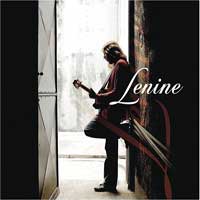
Lenine 'Lenine'

lenine.jpg

Ever since Antonio Carlos Jobim came north to record with Frank Sinatra in the 60s, artists like João Gilberto, Caetano Veloso, and Gilberto Gil have carried the legacy of MPB – the acronym for “Brazilian Popular Music” – to a global audience. Recently a younger generation has cemented Brazil’s place as a superpower in the music world. But Brazil, we now learn, has been holding out on us: with Lenine, Americans finally have a chance to hear the man who virtually swept Brazil’s annual TIM awards last year, winning “Best CD,” “Best Male Vocalist” (both in the judges’ voting and the separate fans’ poll) and “Best Song,” plus two Latin Grammys on top of it all. With his husky voice and irresistible blend of MPB, rock, hip-hop, and traditional music, Lenine (pronounced Leh- NEE-nee) has been called Brazil’s answer to Prince. His songs have been recorded by Milton Nascimento, Sergio Mendes, even Dionne Warwick.

But until now, he has been just a rumor to most American fans. Lenine’s self-titled US debut, culled from three remarkable Brazilian releases, and his stunning turn at the recent 2006 South By Southwest Festival, show that rumors can sometimes be true. Listening to Lenine, the mind (or maybe it’s the music) begins to play tricks on you, and you’re suddenly hearing echoes of Ry Cooder, Beck, Silvio Rodriguez, Stevie Wonder, Massive Attack, even the Beatles. Lenine announces himself right away, starting the compilation with the sounds of acoustic guitars over the distant pounding of drums, and leading into the effortless funk of “Jack Soul Brasileiro.” His rhythmic singing blurs the boundary between song and rap. A break featuring traditional forro accordion and maracatu drums from northeastern Brazil is embroidered with brief electric guitar power chords. Some of the most striking pieces on Lenine are the works that take a particularly Brazilian approach to electronica.

July 10, 2006

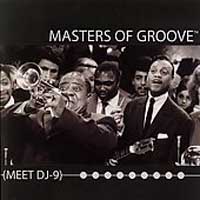
Masters of Groove 'Masters Of Groove Meet Dj-9'

masters.jpg

Masters Of Groove Meet Dj-9 is The follow up to “Masters Of Groove Meet Dr. No” JZZ 20306-2 which Featured: B3 great, Reuben Wilson - Organ, Grant Green, Jr – Guitar, & Bernard “Pretty” Purdie Drums. “Four all-star jazz-soul-funk-groove veterans (together for the first time) take on the music from the first 1962 Bond adventure film “Dr. No”. Masters Of Groove Meet Dj-9 takes on a electronica groove and focuses on collaborations with Dj-9, the Pro Tools & Production wizardry of Producer POLO and features Jazz, Groove, multi keyboardist Marc Cary whose credits include Roy Hargrove, The RH Factor, Joe Claussell, Verve Remixed, Spiritual Life Music and several tracks on the Ibadan label for Jerome Sydenham.

...a jazzy, electronica fueled odyssey, of beats & sound! ...groove, raw beats, breaks, future- bossa, chill, downbeat & ambient jazz!

July 06, 2006

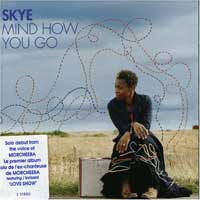
Skye 'Mind How You Go'

skye.jpg

As the voice of Morcheeba, Skye soundtracked our lives on albums such as Big Calm, she sold five million records and graced stages around the world. And yet somehow, she’s always remained an enigma. Private about her personal life and modest about her achievements, she never really played the pop star game. Skye’s debut solo album, MIND HOW YOU GO, is not so much a leap into the dark as a step into the light. Yet it was also a journey into the unknown. Of course, there is much that is familiar - the beguiling quality of her voice, the potent melodies that bury themselves deep inside your brain, and the cool elegance of her delivery. But this is also Skye as you have never heard her before. With Morcheeba, she was usually singing someone else’s lyrics. MIND HOW YOU GO finds Skye singing her own songs, telling her own stories and finding her own way. Skye’s determination to make a solo record dictated a steep learning curve because for the first time she was faced with the responsibility of coming up with the songs. “I’m proud of what I did with Morcheeba and I never felt fake singing someone else’s words. But this record is the real me. I haven’t had to learn the emotion behind the songs because it was already there. People ask what this record means to me, but that’s an alien question because I’ve been living and breathing it. It’s not a question of what it means to me. This record is me.” “What’s Wrong With Me?” is the first single from the record and features remixes by Nouvelle Vague, Jim Noir and Phonique.